How to Choose a Tactical Dog Collar (and When You Don’t Need One)
Search “tactical dog collar” and you’ll find hundreds of them. Most look the same in a photo: black nylon, a handle, a chunky buckle. The difference only shows up when your dog hits the end of the lead.
Here’s what to look for, how to measure, and when you don’t need a tactical collar at all.
What makes a collar “tactical”
A tactical collar is built for control as much as for holding a tag. The good ones share four things:
- Wide, heavy webbing. Thicker nylon spreads the load across more of the neck and doesn’t fray at the edges. Ours uses 1680D nylon.
- A grab handle. A short handle on top of the collar so you can hold your dog close without fumbling for the lead.
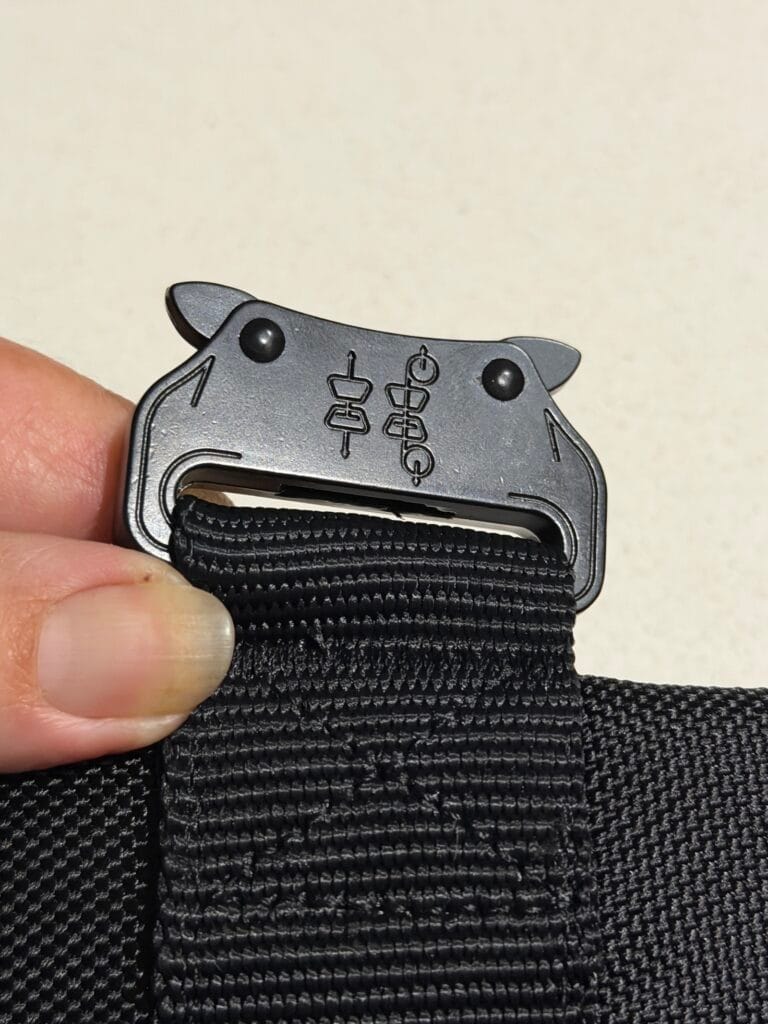
- A metal buckle. The buckle takes the load every time your dog pulls. Plastic clips crack, especially in the cold or after a season in the sun.
- A solid D-ring. Look for a welded or one-piece ring, not a bent wire ring that can open up under load.
Do you need a handle?
A handle earns its place when you need your dog right beside you, fast. Think crossing a busy road, walking past another dog, holding still at the vet, or lifting a big dog into the car.
If your dog mostly wanders the yard or walks calmly on a loose lead, you don’t need one. A plain, comfortable collar is the better everyday choice.
Metal or plastic buckle?
Metal, if your dog is big or pulls. A quick-release metal buckle opens when you want it to and stays shut when you don’t. Plastic side-release clips are fine on small dogs, but they’re the part that usually fails first on cheap gear. We’ve written more about that in what actually fails on cheap dog gear.
Comfort: what’s on the inside counts
Heavy webbing against bare fur can rub, especially on short-coated dogs like Dobermans and Rottweilers. A soft inner layer such as neoprene stops the collar chafing when your dog wears it all day.
How to measure your dog’s neck
- Use a soft tape measure around the neck where the collar normally sits.
- Keep the tape snug but not tight. You should fit two fingers under it.
- Check the measurement against the collar’s size range. If your dog sits right at the end of a range, go for the size where they land in the middle.
A collar that’s too loose can slip over the head. Too tight and it rubs. It’s worth the two minutes.
Collar or harness?
A collar is great for control, ID tags and everyday wear. If your dog pulls hard on walks, clip the lead to a harness instead. A harness spreads the pull across the chest rather than the neck. Our Enforcer tactical harness has metal buckles and a grab handle of its own, and there’s a guide to sizing a harness for a big dog.
Plenty of owners use both: a harness for walks and a collar for everything else.
Our two collars
- Tactical Dog Collar – $49. 1680D nylon, neoprene lining, reinforced grab handle, quick-release metal buckle and stainless steel D-ring. Fits necks 45–66 cm. Made for Dobermans, Rotties and anything else with a neck like a fire hydrant.
- Everyday Dog Collar – $16. No handle, no fuss. Nylon webbing, neoprene lining, quick-release buckle and a stainless steel D-ring that won’t rust out. Three sizes to fit necks 25–59 cm.
Quick checklist
- Heavy webbing that won’t fray
- Metal buckle, not plastic
- Solid D-ring
- A handle only if you need close control
- Soft inner lining for all-day wear
- Measured neck, with two fingers of room
Not sure which one suits your dog? Email us at info@badpets.net.au with their breed and neck size and we’ll tell you straight.